
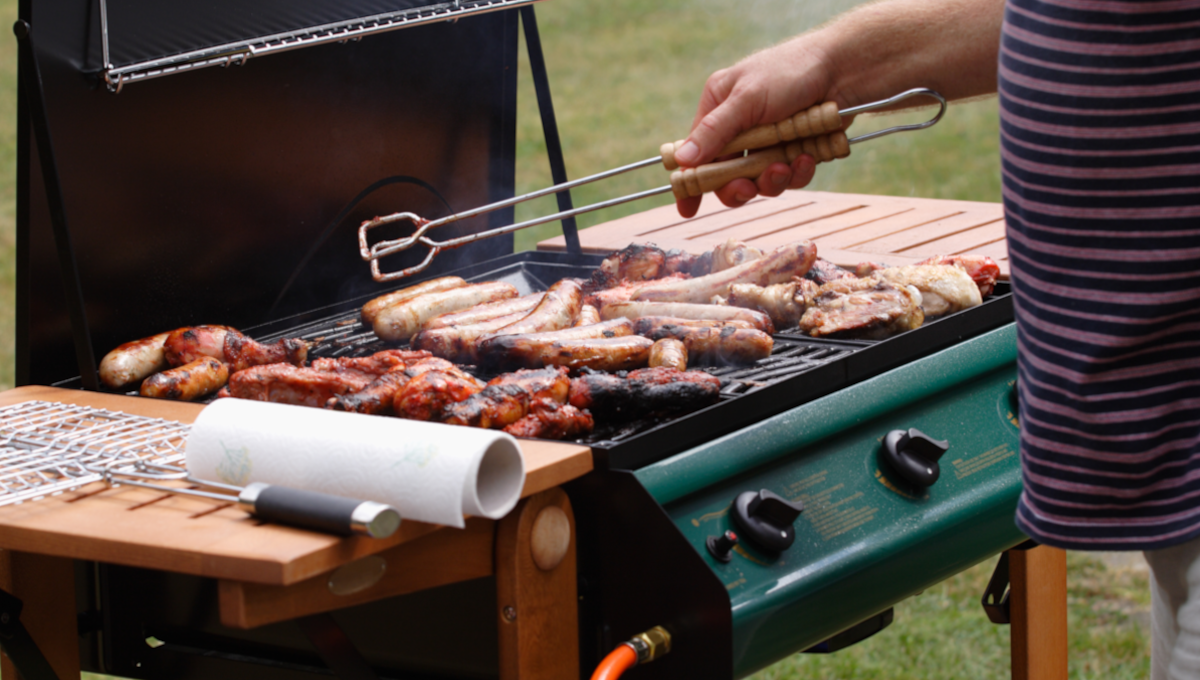
Labor Day weekend marks the unofficial end of summer for many Americans, bringing one last round of backyard barbecues, picnics and gatherings with family and friends.
But as summer winds down, food safety should not. Improper food handling can allow harmful bacteria to multiply and turn a holiday celebration into a case of food poisoning. Public health officials recommend keeping a few basic food safety practices in mind.
Keep hot foods hot and cold foods cold
One of the biggest risks at outdoor gatherings is allowing perishable foods to remain in the “danger zone,” between 40 degrees F and 140 degrees F, where bacteria can multiply rapidly.
Cold foods should be kept at 40 degrees F or below. Pack coolers with plenty of ice or frozen gel packs and keep the lid closed as much as possible. If possible, place coolers in the shade.
Hot foods should be kept at 140 degrees F or above until they are served.
Perishable foods should not be left out for more than two hours. If the outdoor temperature is above 90 degrees F, that time drops to one hour.
Don’t forget the thermometer
Labor Day cookouts often mean firing up the grill, but appearance alone is not a reliable way to determine whether meat and poultry are safely cooked.
A food thermometer should be used to check the internal temperature of food at its thickest part.
Safe minimum internal temperatures include:
Beef, pork, lamb and veal steaks, chops and roasts: 145 degrees F, followed by a three-minute rest time;Ground meats: 160 degrees F;Whole poultry, poultry pieces and ground poultry: 165 degrees F.
When cooking thinner foods, such as hamburger patties, insert the thermometer from the side so the probe reaches the center.
Once food is cooked, place it on a clean platter. Never put cooked meat or poultry back onto the same plate that previously held it raw.
Avoid cross-contamination
The more hands, utensils and surfaces involved in preparing food, the more opportunities there are for contamination.
Wash hands thoroughly with soap and running water before and after handling food, particularly raw meat and poultry. If running water is unavailable, hand sanitizer can be useful, but it is not a replacement for proper handwashing when hands are visibly dirty.
Use separate plates, cutting boards and utensils for raw meat and foods that are ready to eat. Wash utensils and surfaces thoroughly between uses.
Cool food before you hit the road
Food prepared ahead of time should be cooled promptly and stored in shallow containers before being placed in the refrigerator or packed for transportation.
When traveling, the U.S. Department of Agriculture recommends packing perishable food directly from the refrigerator or freezer into a cooler. Keep raw meat and poultry separated from foods that will be eaten without further cooking.
Coolers should be transported in the passenger area of a vehicle when possible, rather than in a hot trunk.
Wash produce before cutting
Fruits and vegetables should be washed under running water before they are cut or prepared, including produce with peels or rinds that will not be eaten.
Cutting through an unwashed melon, apple or other piece of produce can transfer bacteria from the outside to the edible portion.
After cutting, refrigerate produce and keep it cold until it is served.
Handle leftovers safely
When the cookout is over, don’t let leftovers become an afterthought.
Refrigerate perishable foods within two hours, or within one hour if temperatures are above 90 degrees F. Divide leftovers into small, shallow containers so they cool more quickly.
Refrigerated leftovers should generally be eaten within four days or frozen for later use. When reheating leftovers, heat them to an internal temperature of 165 degrees F. Soups, sauces and gravies should be brought to a rolling boil.
Labor Day may signal the end of summer, but foodborne bacteria do not take a holiday. A few simple precautions — washing hands, avoiding cross-contamination, using a food thermometer and keeping food at safe temperatures — can help ensure the final cookout of the season is remembered for the food and company, not food poisoning.
As September is also Food Safety Education Month, the holiday provides an opportunity to remember that safe food handling is just as important at the season’s final barbecue as it was at the first.