
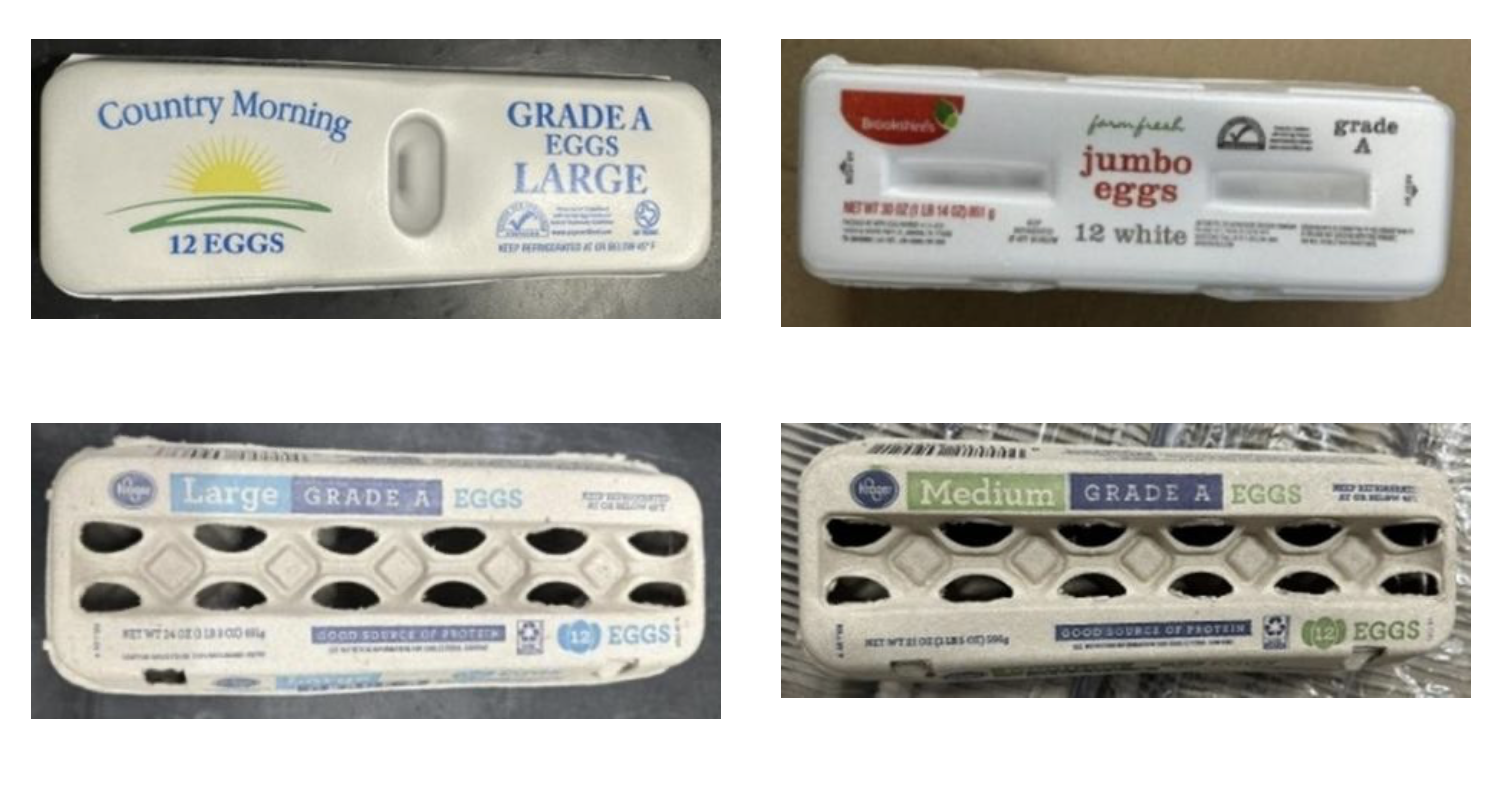
The CDC has declared over a Salmonella outbreak traced to eggs with 134 patients having been identified across 18 states.
Officials with the Food and Drug Administration and Centers for Disease Control and Prevention report that the outbreak has been long running with the first patient having become ill on Nov. 21, 2025. The most recent patient became ill on Aug. 12 this year.
Of 54 ill persons with information available, 46 reported eating eggs before becoming ill. There have been 34 hospitalizations, and no deaths have been reported. The most recent outbreak update posted by FDA was posted on July 24 when 98 people from 17 states were reported sick. At that time, 40 of 44 ill people with information available reported eating eggs before becoming ill.
Outbreak patients lived from coast to coast.
As part of the outbreak investigation, the FDA conducted an inspection at Midwest Poultry Services L.P. in Texas and collected environmental samples. Three samples collected during FDA’s inspection were positive for Salmonella and matched the strain of Salmonella Enteritidis causing illnesses in the outbreak.
Epidemiological, laboratory, and traceback evidence from this investigation, have determined that shell eggs produced by Midwest Poultry Services L.P. in Texas were the likely source of illnesses for this outbreak. On July 22, 2026, Midwest Poultry Services L.P. recalled all white shell eggs and brown cage free shell eggs produced at their facilities in Texas. At this time, all shell eggs from this recall should no longer be available for sale for consumers.
More than 30 brands and configurations of eggs were subject to recall. For a list of those products, click here. The eggs have a use by date of Aug. 17, but consumers often keep eggs past such dates and are therefore urged to check any eggs they have in their homes.
There were likely many more outbreak patients than were reported in the official count. This is because many people do not seek medical attention and others are not specifically tested for Salmonella infection. The CDC estimates that for every confirmed patient in a Salmonella outbreak there are 29 who go undetected.
About Salmonella infections
Food contaminated with Salmonella bacteria does not usually look, smell, or taste spoiled. Anyone can become sick with a Salmonella infection. Infants, children, seniors, and people with weakened immune systems are at higher risk of serious illness because their immune systems are fragile.
Anyone who has eaten any of the recalled eggs and developed symptoms of Salmonella infection should seek medical attention. Sick people should tell their doctors about the possible exposure to Salmonella bacteria because special tests are necessary to diagnose salmonellosis. Salmonella infection symptoms can mimic other illnesses, frequently leading to misdiagnosis.
Symptoms of Salmonella infection can include diarrhea, abdominal cramps, and fever within 12 to 72 hours after eating contaminated food. Otherwise, healthy adults are usually sick for four to seven days. In some cases, however, diarrhea may be so severe that patients require hospitalization.
Older adults, children, pregnant women, and people with weakened immune systems, such as cancer patients, are more likely to develop a severe illness and serious, sometimes life-threatening conditions.
Some people get infected without getting sick or showing any symptoms. However, they may still spread the infections to others.