
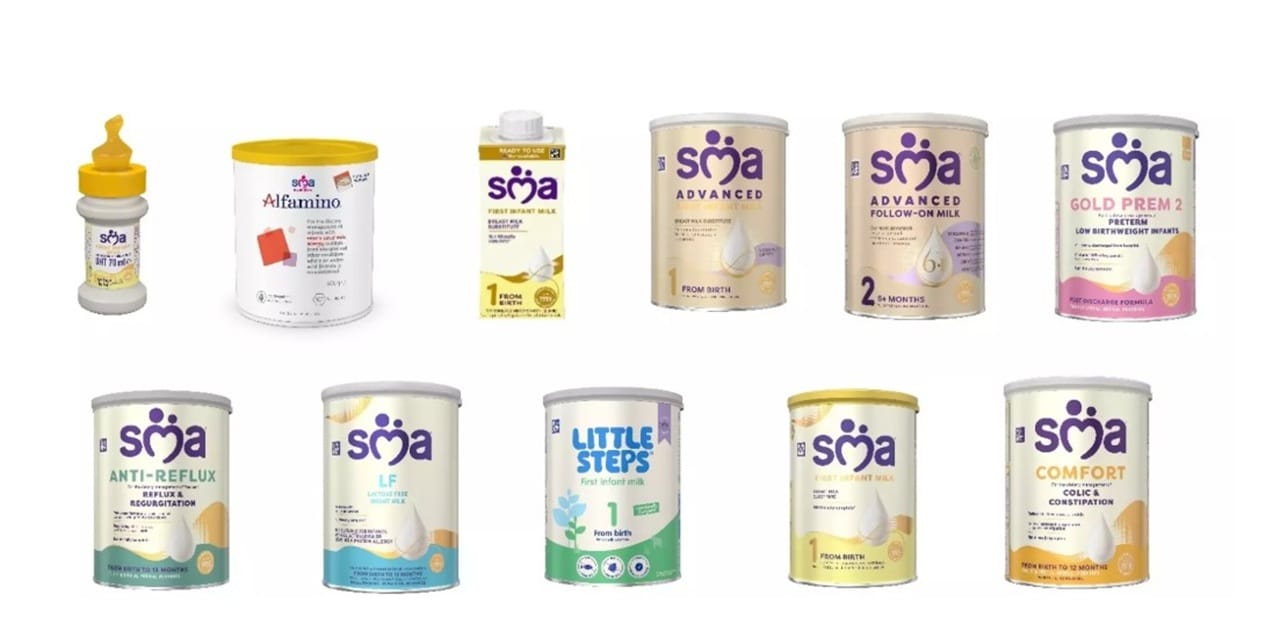
The UK Health Security Agency (UKHSA) is investigating more than 35 reports of illness connected to recent infant formula recalls.
UKHSA and other agencies have received 36 clinical notifications where children who have consumed recalled batches have symptoms consistent with cereulide toxin poisoning.
Multi-country recalls of formula products from Nestlé, Lactalis, Danone and others are ongoing following the detection of cereulide – a toxin produced by Bacillus cereus. The toxin can cause nausea, vomiting, and stomach pain 30 minutes to six hours after ingestion. Cereulide was found in arachidonic acid (ARA) oil, a raw material from a Chinese supplier. In Scotland, there is an estimated 47,000 units of product affected by the recall.
England has the most illness reports with 24, seven are in Scotland, three are in Wales and one is in Northern Ireland. There is also one report from Jersey, Guernsey or the Isle of Man. Seventeen children are male and 16 are female. This information is unknown in three cases.
The issue was debated in the House of Lords earlier this week. Gillian Merron, Parliamentary Under-Secretary of State at the Department of Health and Social Care, said it is a live incident, so the focus is on managing the situation. She said there will be the opportunity to look into the potential of any systemic issues in the future.
The Food Standards Agency (FSA) is investigating the source of contamination. Healthcare professionals are advised to do a clinical assessment and stool culture for toxigenic Bacillus cereus in infants coming to hospitals with compatible symptoms, along with testing recalled formula for cereulide toxin. Direct cereulide toxin testing without culture in clinical samples is not available in the UK.
Wider developments
The European Centre for Disease Prevention and Control (ECDC) has received reports of diarrhea in infants following consumption of recalled products but no cases have been severe. One infant who had formula from a recalled batch tested positive for the toxin and developed vomiting and diarrhea but has now recovered.
ECDC and the European Food Safety Authority (EFSA) are working on an outbreak assessment linked to the incident, which should be published later this month.
In a parliamentary question in the European Parliament, Biljana Borzan, a Croatian politician, asked when the EU Commission was first informed of suspected health risks.
Borzan asked about measures the EU Commission has taken to ensure accountability along the infant formula supply chain, and if there will be a review of food safety rules applicable to infant nutrition.
Singapore has reported three cases with mild symptoms associated with cereulide exposure. Two confirmed illnesses were recorded in a Brazilian state.
In Hong Kong, 10 samples tested positive for cereulide ranging from 0.2 to 8.6 micrograms per kilogram of food. The Food and Environmental Hygiene Department (FEHD) has received 48 complaints and enquiries related to infant formula products.
Nestlé Hong Kong has stopped the sales of more than 20 batches. According to the company, about 159,000 cans of products have been recalled.