
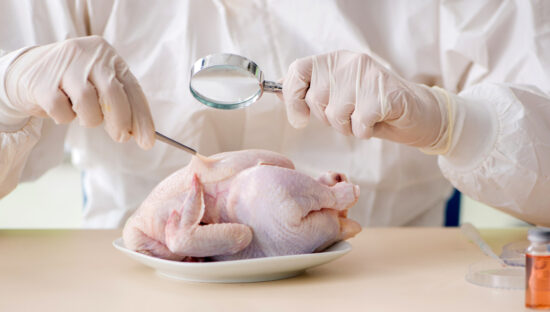
A new way to inhibit bacteria that causes foodborne illnesses has been discovered by researchers at The Ohio State University.
The researchers found that antimicrobial peptides derived from probiotic bacteria can inhibit the most common bacteria found in chicken. The experiments showed that the peptides could be used in commercial feed. Peptides are short chains of amino acids that are the building blocks of proteins.
The peptides could provide an alternative approach to antibiotics for controlling Salmonella in chickens and chicken products, which are the primary vehicle for Salmonella infections in people, according to the research report.
In a paper published in the journal Microbiology Spectrum, the researchers reported that three small peptides derived from Lactobacillus rhamnosus GG inhibited the growth of Salmonella serovars Typhimurium and Enteritidis —the top Salmonella serovars isolated in human infections — in a series of lab experiments. They also inhibited the growth of other serovars commonly found in foodborne Salmonella infections.
The researchers tested the efficacy of the peptides in a flock of layer chickens who were challenged with Salmonella Typhimurium. They found that two of the peptides reduced intestinal colonization at seven days post-infection, with no adverse effects on the microbial community in the intestine. The peptides were also unaffected by exposure to heat and protease treatment, a finding that suggests they could potentially be incorporated into commercial feed.
Chickens and turkeys are frequently colonized with Salmonella without detectable symptoms, but people can become ill if they consume undercooked poultry products that are contaminated with the bacteria. People can also become sick from cross contamination of food preparation surfaces when poultry is washed before cooking.
“We identified two antimicrobial peptides that kill many different types of Salmonella and also reduce Salmonella load in chickens,” corresponding study author Gireesh Rajashekara, PhD, said in a statement from the journal publisher the American Society for Microbiology.
“This study could provide a framework for developing and using antimicrobial peptides to control Salmonella in chickens, thereby promoting food safety and public health.”