
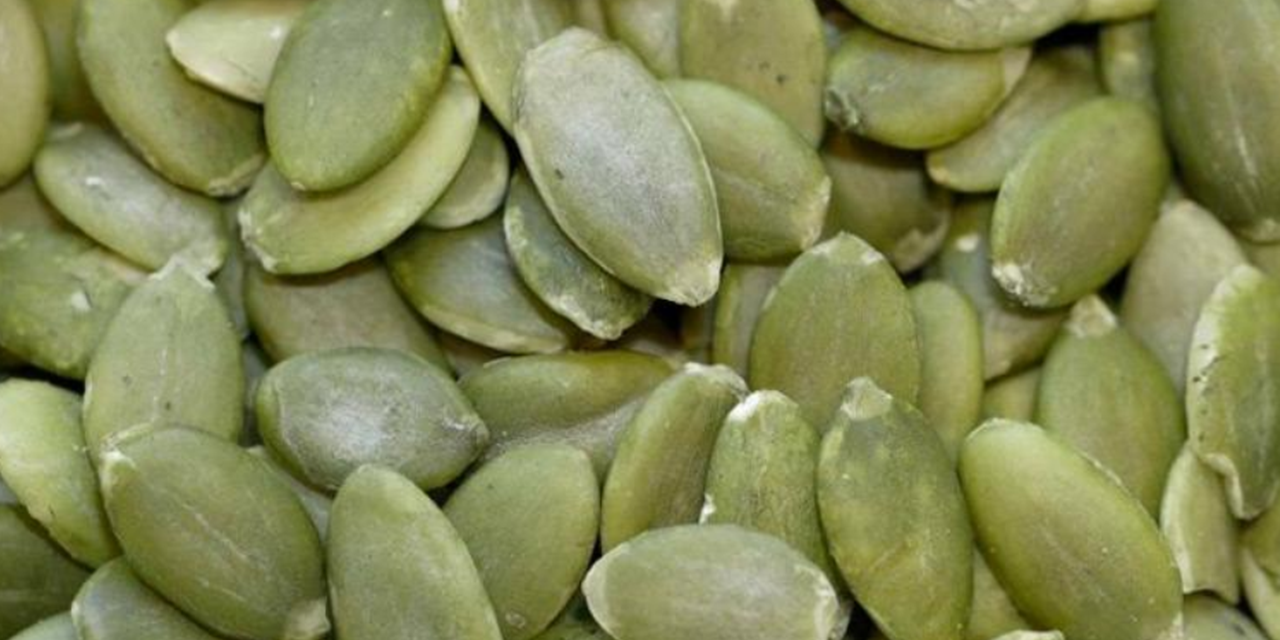
Sampling of pumpkin seeds and at the processing plant has detected Salmonella, according to researchers investigating an outbreak in France.
A nationwide outbreak of Salmonella Enteritidis affected 81 people from May 3 to Aug. 12. The median age of patients was 35 and 56 were female. Eight people were hospitalized and two went to the emergency department because of their symptoms.
On 30 July, the National Reference Centre for E. coli, Shigella and Salmonella at Institut Pasteur and Santé publique France noted an increase in a genomic cluster of Salmonella Enteritidis, with 49 isolates since May.
A study in the journal Eurosurveillance reported that sick people were mainly female, with a median age of 32 and 17 were from a single region. The delay from strain isolation at the primary laboratory and sequencing results is about four weeks.
Breakthrough thanks to Austria
Santé publique France conducted epidemiological investigations by phone with cases, using a trawling Salmonella questionnaire of 25 pages asking about food and environmental exposures.
Hypothesis generating interviews revealed most cases shopped at the Grand Frais supermarket. However, no specific food item was identified. As investigations continued, an unusually large proportion reported consuming different nuts and seeds.
Pumpkin seeds have a long shelf life, are often consumed raw, and are included in snack mixes, which complicates epidemiological and traceback investigations.
In August, a message was posted on EpiPulse, an online platform for European health authorities to exchange information on outbreaks. Austria reported a food isolate obtained in June from pumpkin seeds imported from Poland with an identical profile as the reference French isolate. Consumption of pumpkin seeds alone or in mixes was later confirmed for 21 of 24 patients.
Traceback investigations identified one producer of pumpkin seeds that supplied Grand Frais. This firm supplied the seeds in large bags labeled with a lot number to two French contractors, who repackaged them into smaller containers for sale in bulk, or pre-packaged them ready-to-buy alone or in mixes for the supermarket.
Positive samples and wider picture
Samples of pumpkin seeds from Grand Frais in the original packaging were taken at the homes of three cases. All three tested positive for Salmonella Enteritidis and sequencing confirmed clustering with cases.
In late August, the supplier recalled and withdrew pumpkin seed batches on the market since March. Onsite inspections identified two surface samples from the processing plant were positive for Salmonella Enteritidis, with sequencing underway.
The implicated seeds were grown from seedlings imported from Austria, cultivated and processed in France. Traceback work has not been able to identify a link between the producer and pumpkin seeds from Poland.
Export was identified to Belgium, Switzerland and Luxembourg through the Rapid Alert System for Food and Feed (RASFF). Switzerland and Belgium did not have any related cases but Luxembourg recorded a related human isolate on Sept. 3. This person was ill in late August and had consumed mixed nuts and raisins containing pumpkin seeds. Sampling of leftover products confirmed contamination by the outbreak strain.
The United Kingdom and Portugal also reported isolates in the outbreak cluster. The UK patient had traveled to France from mid-July to early August and had symptom onset the week after return to the UK but there is no information about pumpkin seed consumption. The isolate from Portugal is from May 2026 but there is no information about a link with France or pumpkin seeds.