
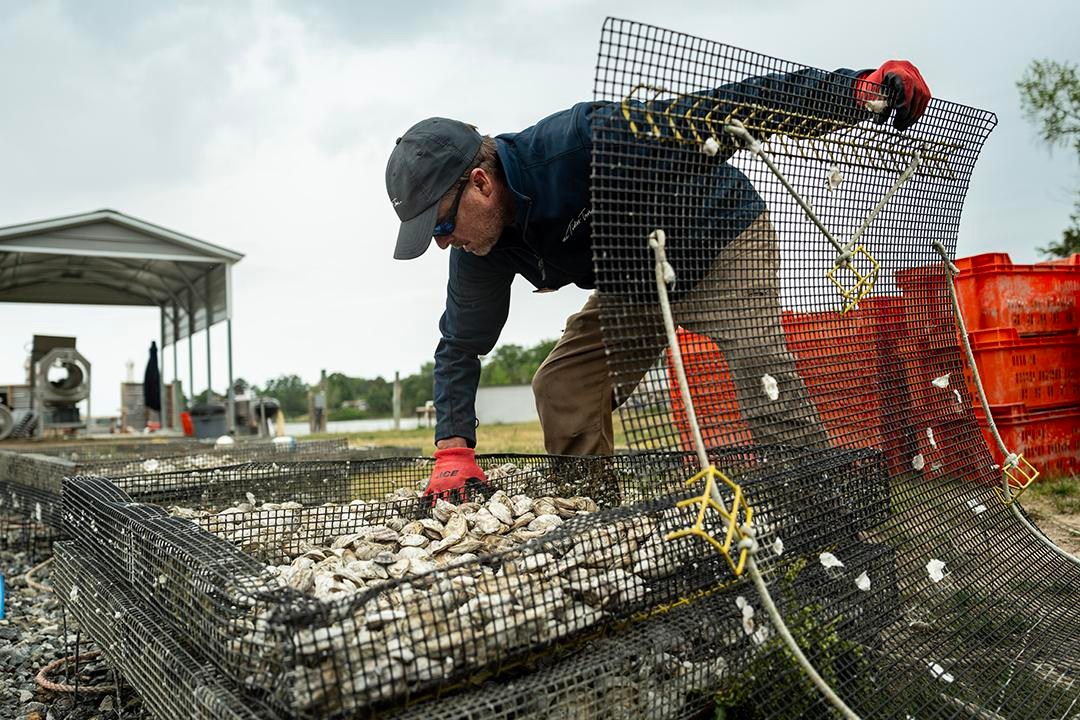
Oyster harvest at the Tides Inn in Irvington, Virginia. | The Tides Inn
American resorts are once again having a moment — and it’s not pickleball partisans driving the trend. A new generation of travelers, beset with decision fatigue in their daily lives, are embracing the all-inclusive stay where activities, amenities, and dining are all on the menu and usually just a short walk from their rooms.
Fortunately, stress-free no longer needs to mean bland or generic when it comes to cuisine and culture. Resorts have begun forging deep culinary connections to their surroundings, far beyond merely offering a few regionally specific cocktails or themed burger toppings.
Onsite farms, creameries, and distilleries provide fresh ingredients with true terroir, as well as a new category of resort activity: food-and-drink-focused tours and workshops to fill the time between morning yoga and an afternoon poolside nap.
Some resort restaurants, like Clay at Wildflower Farms in New York’s Hudson Valley and Sierra Mar at the Post Ranch Inn in Big Sur, California, have become destinations in themselves, where star chefs take diners deep into a region’s foodways.
These resorts leave visitors not just relaxed but also satisfied, having truly experienced — and tasted — a particular place.
Partner content from Acura
Acura has always done things its own way. We believe the best experiences are created through intentional choices, thoughtful craftsmanship, and the confidence to pursue a different approach. This spirit is reflected in our philosophy of Precision Crafted Performance. Learn more.
Hawks Cay Resort
Duck Key, Florida
By the time you get to Hawks Cay Resort in the middle of the Florida Keys, the blue vistas of the Overseas Highway will have made mainland worries seem very far away. The 60-acre resort on Duck Key offers a spa, five pools (including a saltwater lagoon), and soon a full water park. Also making a splash is Salt + Ash, the resort’s flagship live-fire restaurant from Florida native, Top Chef winner, and former Eater Miami Chef of the Year Jeremy Ford. Of course, fish and seafood from the surrounding waters feature prominently. But Florida flavors shine through in other ways too: Much of the produce on the menu comes from Ford’s Farm, strategically located between Miami Beach and the Keys. That might mean homegrown lychees in a uniquely local take on conch salad, or heirloom tomatoes just hours off the vine accompanying crisp-fried spear-caught fish.
The Tides Inn
Irvington, Virginia
Many resorts lay claim to a signature dish or cocktail. But the Tides Inn, situated on a quiet tributary of the Chesapeake Bay about 3 hours’ drive from Washington, D.C., has something few resorts, if any, can boast: its own oyster. Cultivated near the property by resident ecologist Will Smiley and served exclusively at the resort’s Salt & Meadow restaurant, the Widgeon oyster provides guests with an intimate connection to the estuary it calls home. To taste it is to taste the tides and the weather. “Our oyster changes salinity as the season changes, and as the weather changes,” says executive chef Kyle Perkins. He further notes that the freshwater influx with a heavy rainfall can quickly, if temporarily, change how much of a salty punch a Widgeon possesses. Beyond bivalves, Perkins sources everything from beef to blackberries from the region. Along with activities from lawn games and pickleball to kayaking, guests can even help themselves to the harvest: Those blackberries, a thornless variety, grow in abundance on the property, giving many children a first foraging experience.
Wildflower Farms, Auberge Collection
Gardiner, New York
Though it’s only about a 90-minute drive from the concrete canyons of Manhattan, Auberge Collection’s Wildflower Farms feels a world away. The Hudson Valley property’s 65 cabins, cottages, and suites feature floor-to-ceiling windows framing arcadian views. Thistle, an Auberge Spa, makes use of local botanicals and blooms in its treatments, while the on-site farm provides more than 14,000 pounds of produce annually for the restaurant, Clay. “The Hudson Valley is unique in the array of locally grown ingredients available,” says farm director Will Conway, noting that the resort’s culinary reach extends beyond its 140 acres. The menu is resolutely seasonal; even a dish like ricotta meatballs provides a changing taste of what is coming from nearby producers, with the protein shifting from pork to lamb depending on the time of year.
Kohler, Wisconsin
Sheboygan County, Wisconsin
The Kohler name is, for most people, synonymous with kitchen and bath fixtures. But the company is also a serious player in hospitality, most notably with Kohler, Wisconsin, its sprawling resort in the town where the company is headquartered, two and a half hours from Chicago. Along with golf, a legendary spa, and outdoor activities like canoeing, hiking, hunting, and fishing, Kohler, Wisconsin, puts a strong emphasis on dining with Midwestern ingredients and hospitality. Among the on-site options is River Wildlife, a log cabin restaurant offering regional specialties like walleye, pheasant, and duck. The Wisconsin Room, meanwhile, combines steakhouse fare with Wisconsin supper club favorites like a “Not So Lazy” Susan, which includes deviled eggs, chicken liver mousse, and pickled vegetables in a nod to the classic relish tray. Regional cocktails like a brandy Old Fashioned and a grasshopper (de rigeur after dinner) leave no doubt where you are.
Brush Creek Ranch
Saratoga, Wyoming
This resort three and a half hours northwest of Denver is big — about twice the size of Manhattan big. That leaves plenty of room for culinary operations that include a distillery, a bakery, and a greenhouse. Brush Creek Ranch’s herd of American wagyu cattle is raised using Japanese methods, which minimize stress in the name of producing superior marbling for added tenderness. You may not run into a steer getting a facial in one of the resort’s two spas, but rest assured, these animals are living their best lives. The ranch’s goats, meanwhile, don’t just assist with yoga classes: Some provide milk for the property’s Medicine Bow Creamery and its range of excellent cheeses. It all comes together at the Cheyenne Club restaurant, where meals and most beverages — like many of the resort’s activities, ranging from horseback riding and hiking to fly-fishing and standup paddleboard yoga — are included in the room rate.
Castle Hot Springs
Morristown, Arizona
At Castle Hot Springs, everything comes back to the water. The 130-year-old resort in the Bradshaw Mountains, about an hour north of Phoenix, was Arizona’s first spa retreat; families like the Rockefellers and Astors would come to soak in the spring-fed pools first discovered by Native American people thousands of years before. Along with a full roster of wellness and outdoor activities, the resort grows 35 types of citrus and features a 3-acre farm, irrigated by the same mineral-rich water that fills the pools. “Everything tastes a little bit better because it’s already pre-seasoned for me,” said executive chef Chris Knouse. To get a taste of “the farm on a plate,” Knouse recommends the lunchtime “farmer’s hummus,” which comes with that day’s harvest as a crudités assortment. At dinner, Harvest restaurant offers a tasting menu where dishes like cavatelli with corn, zucchini, tatsoi, and cherry tomatoes offer a deeper dive into what the Sonoran Desert can produce.
Post Ranch Inn
Big Sur, California
Arguably the only thing more beautiful than Post Ranch Inn is the drive there. It is, after all, located along what might be the most picturesque stretch of road in the entire country: Highway 1 in Big Sur. On a cliff overlooking the Pacific Ocean, the resort offers guests access to a spa and three pools, as well as activities like forest meditation and stargazing. Of Post Ranch Inn’s 100 acres, 90 are kept wild, and just over one is dedicated to a chef’s garden, which supplies the resort’s restaurant Sierra Mar. On this patch of land, chef Reylon Agustin and his team grow everything from apples and tomatoes to herbs and specialty ingredients like celtuce. From the surrounding forests come wild mushrooms, while nearby waters provide treasured ingredients like abalone for Sierra Mar, which is housed in a glass and wood pavilion that feels like it’s hovering over the cliff’s edge. Augustin knows well enough not to try to compete with the view. Instead, dishes like abalone congee and Grimaud Farms guinea hen with sunchokes and stone fruit highlight local ingredients to “complement the experience” of being in such a singular place.