
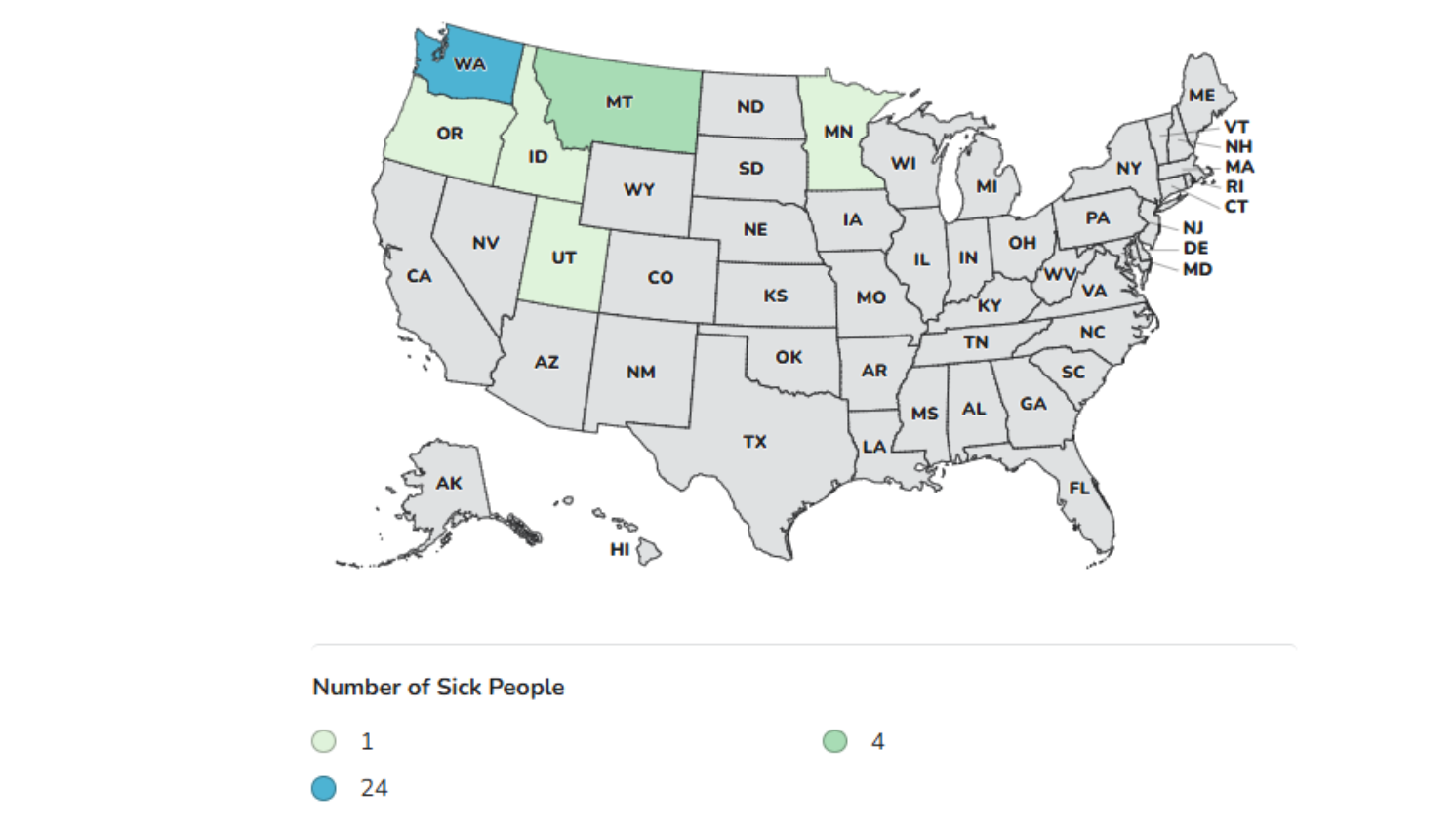
Ten people have been added to the patient count in a Salmonella Bovismorbificans outbreak from recalled broccoli sprouts traced to Evergreen Fresh Sprouts LLC.
As of Sept. 24 there were 32 confirmed patients across six states. On Sept. 9 there were 22 patients across four states.
This outbreak associated with Evergreen Fresh Sprouts of Moyie Springs, ID, is separate from an outbreak of Salmonella and E. coli infections linked to Everything Sprouts produced in Minneapolis, MN. The Everything Sprouts outbreak has sickened 55 people.
For the Salmonella outbreak associated with Evergreen Fresh Sprouts, information collected by state officials and the Centers for Disease Control and Prevention shows illnesses began on dates ranging from July 7 through Sept. 3. The sick people live in Idaho, Minnesota, Montana, Oregon, Utah and Washington. There have been three hospitalizations but no deaths have been reported.
Of 27 people interviewed, 26 reported eating sprouts or microgreens. Twenty-two reported specifically eating broccoli sprouts, and one reported eating a microgreen mix containing broccoli microgreens.
The implicated broccoli sprouts were distributed in Idaho, Montana and Washington, but may have been distributed in other states.
Samples of Evergreen Fresh Sprouts collected from a grocery store and a sick person’s home both tested positive for Salmonella Bovismorbificans. Whole genome sequencing showed that the samples matched the strain of Salmonella that is making people sick.
On Sept. 4, Evergreen Fresh Sprouts LLC initiated a recall of its broccoli sprouts. According to the Food and Drug Administration the implicated sprouts should no longer be available for sale. The company has not recalled any other sprout varieties.
Previous outbreaks
This is the third outbreak since 2011 linked to Evergreen Sprouts. In 2011, 25 people in five states were infected with Salmonella Enteritidis from alfalfa and spicy sprouts sold under the Evergreen Produce label.
The FDA warned consumers directly on June 27 that year, a step the agency generally takes only when a company will not recall, and the co-owner told the trade press that recalling would amount to admitting guilt. The company ultimately recalled sprouts on July 1.
In 2014, 19 people in six states were infected with E. coli O121 traced to raw clover sprouts served at sandwich shops in Washington and Idaho.
FDA has inspected the company several times since 2010. The inspection that followed the 2011 outbreak produced a formal warning letter. Most of the inspections since then, including the 2014 inspection, were classified Voluntary Action Indicated, meaning the agency found things it wanted fixed but left the fixing to the firm. The most recent inspection was in 2024, also Voluntary Action Indicated.
About Salmonella infections
Food contaminated with Salmonella bacteria does not usually look, smell, or taste spoiled. Anyone can become sick with a Salmonella infection. Infants, children, seniors, and people with weakened immune systems are at higher risk of serious illness because their immune systems are fragile.
Anyone who has eaten any Evergreen sprouts and developed symptoms of Salmonella infection should seek medical attention. Sick people should tell their doctors about the possible exposure to Salmonella bacteria because special tests are necessary to diagnose salmonellosis. Salmonella infection symptoms can mimic other illnesses, frequently leading to misdiagnosis.
Symptoms of Salmonella infection can include diarrhea, abdominal cramps, and fever within 12 to 72 hours after eating contaminated food. Otherwise, healthy adults are usually sick for four to seven days. In some cases, however, diarrhea may be so severe that patients require hospitalization.
Older adults, children, pregnant women, and people with weakened immune systems, such as cancer patients, are more likely to develop a severe illness and serious, sometimes life-threatening conditions.
Some people get infected without getting sick or showing any symptoms. However, they may still spread the infections to others.