
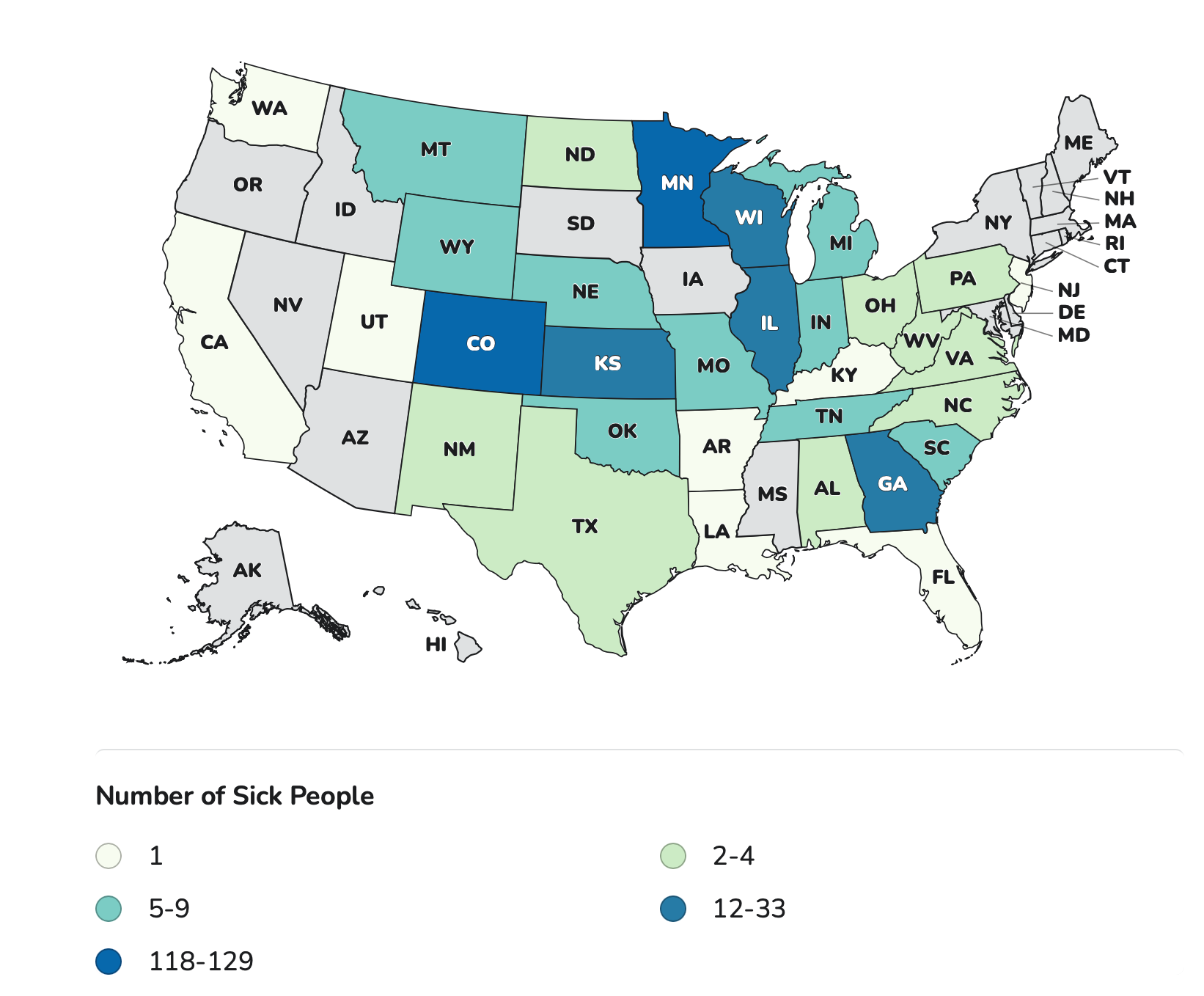
The Centers for Disease Control and Prevention on Aug. 19 raised the count in the Salmonella Javiana outbreak linked to fresh jalapeño peppers to 431 illnesses in 32 states, with 57 hospitalizations and no deaths. Illnesses now start on dates running from June 19 through Aug. 2, 2026, 13 days later than the agency had previously reported. The peppers were grown in Sinaloa, Mexico, and distributed by Coast Citrus Distributors of San Diego. The grower itself has still not been named.
The Food and Drug Administration’s outbreak advisory, last updated Aug. 14, still lists 345 illnesses in 27 states.
The outbreak grew by 86 cases and five states
The counts had been frozen since Aug. 5 at 345 illnesses in 27 states with 36 hospitalizations. CDC’s Aug. 19 update adds 86 cases, 21 hospitalizations and five states: Florida, New Jersey, New Mexico, Pennsylvania and West Virginia.
Hospitalizations now stand at 57 among the 376 patients for whom that information is available, or 15 percent. The earlier figure was 36 of 291, or 12 percent. Patients range in age from under 1 to 85 years, with a median age of 30, and 62 percent are female.
CDC cautions that the true number of illnesses is likely much higher than the number reported, because many people recover without medical care and are never tested, and that the outbreak may not be limited to the states with known illnesses.
Illnesses continued after both restaurant chains pulled the peppers
CDC also revised the end of the epidemic curve. The agency had reported the last illness onset as July 20. It now reports onsets running through Aug. 2.
Chipotle Mexican Grill switched jalapeño suppliers for affected stores beginning July 20, and QDOBA stopped using jalapeños entirely on July 28. Salmonella symptoms typically begin six hours to six days after exposure, which places the meals behind the last illnesses in the final days of July, after both chains had acted. CDC and FDA both say they do not consider the two chains to pose a current ongoing risk to consumers.
CDC has not published an explanation for the later illnesses. The agency notes that recent illnesses may not yet be reported and that it usually takes three to four weeks to determine whether a sick person is part of an outbreak. Interview data shifted in the same direction, with reported meal dates now running through July 16, where they previously ended July 14.
Interviews still point overwhelmingly at Mexican-style restaurants
Of 224 people interviewed, 203, or 91 percent, reported eating at a Mexican-style restaurant before becoming ill, including Chipotle and QDOBA. Investigators have identified 28 illness clusters at Chipotle and QDOBA locations across eight states, up from 27 clusters in seven states. The ingredients most commonly reported were jalapeño peppers, red onion, cilantro and avocado.
Whole genome sequencing found no predicted antimicrobial resistance in samples from 428 patients. Samples from three people carried predicted resistance to one or more of nine antibiotics, including azithromycin, ceftriaxone and trimethoprim-sulfamethoxazole, and one of those samples was also predicted to be nonsusceptible to ciprofloxacin.
Six companies and USDA have now issued recalls or alerts
FDA identified a common grower in Sinaloa through traceback and recommended that Coast Citrus Distributors recall the implicated product. Every downstream recall since has cited those peppers. FDA has posted no recall notice from Coast Citrus itself; the company’s recall is described only in the agency’s advisory text, and it does not appear in the advisory’s recall list or its useful links.
Company (notice date)
What was recalled
Where it went
Dates
Coast Citrus Distributors (described by FDA Aug. 5)
Fresh jalapeño peppers grown in Sinaloa, Mexico
Wholesalers, restaurants and food service companies nationwide
No company notice posted
Taylor Fresh Foods (Aug. 9)
20 refrigerated items — salsas, dips, guacamole, pico de gallo, sandwiches, burritos, salads
26 states; Hannaford, Kroger, Stop and Shop, Target, Trader Joe’s, Walmart, Whole Foods
Best if used by through Aug. 16
Whole Foods Market (Aug. 12)
43 items prepared in the chain’s own Produce and Prepared Foods departments
12 states and online
Best before Aug. 7–16
NatureBest Precut & Produce (Aug. 14)
18 NatureBest- and H-E-B-brand items — pico de gallo, diced jalapeños, stuffed mushrooms, soup mix
Texas and Louisiana
Distributed July 3–Aug. 5; best by through Aug. 15
Salata Dressings (Aug. 14)
Jalapeño Avocado Dressing, 12-ounce bottles
H-E-B stores in Texas
Sold July 13–Aug. 5
Dairyland Produce, dba Hardie’s Fresh Foods (Aug. 17)
Five-pound bags of whole jalapeños, seven lot codes
Two Costco business centers, in Stafford and Dallas, Texas
Production dates July 11–22
USDA Food Safety and Inspection Service (Aug. 8)
Public health alert covering 18 meat and poultry products made with the jalapeños
Nationwide
Alert 08082026-01
Sources: FDA and FSIS recall notices and public health alert, as of Aug. 20, 2026.
Notices are posted for Taylor Fresh Foods, Whole Foods Market, NatureBest, Salata Dressings and Hardie’s Fresh Foods. FSIS has published its alert and a product list.
FDA’s advisory is running behind its own recall page
The advisory’s downstream recall list names NatureBest, Whole Foods Market and Taylor Fresh Foods, plus the FSIS alert. The Salata and Hardie’s recalls, both published on FDA’s recall page, are not on it. The advisory’s case counts, its 27-state list and its stated last illness onset of July 20 also predate the CDC update.
The advisory’s “Stores affected” section still states that Coast Citrus does not appear to supply jalapeños directly to grocery stores. The next sentence names eight retail banners that received products made with the peppers: Hannaford, H-E-B, Kroger, Stop and Shop, Target, Trader Joe’s, Walmart and Whole Foods. CDC’s page names 13, adding Albertsons, RaceTrac, Randalls, Tom Thumb and Wawa. The Hardie’s recall covers whole peppers in bags on a Costco shelf.
FDA says the investigation is ongoing and that the advisory will be updated as additional information becomes available.
The grower has still not been identified
Both agencies describe the source the same way, as a common grower in Sinaloa, Mexico, that supplies Coast Citrus. Neither has named it. FDA says Coast Citrus is no longer importing from that grower. Taylor Fresh Foods says it is no longer sourcing from “this farmer” and is filling orders from alternative suppliers.
Under the FDA Food Traceability Rule, produce including peppers will carry lot-level records through the supply chain, but the compliance date has been pushed to July 2028.
What consumers should do
Recalled items carry best-by dates that in some cases ran into mid-August, so product may still be in home refrigerators. Consumers should check for the recalled products, throw them out or return them for a refund, and wash and sanitize surfaces and containers the peppers or products may have touched.
Most people infected with Salmonella develop diarrhea, fever and stomach cramps six hours to six days after exposure, and most recover in four to seven days without treatment. Children under 5, adults 65 and older and people with weakened immune systems are at higher risk of severe illness. CDC advises anyone with a fever above 102 degrees, bloody diarrhea, diarrhea lasting more than two days without improvement, vomiting that prevents keeping liquids down or signs of dehydration to contact a health care provider.
CDC lists the investigation status as open and FDA lists it as ongoing. Case counts and recall lists in this report reflect the federal record as of Aug. 20, 2026.