
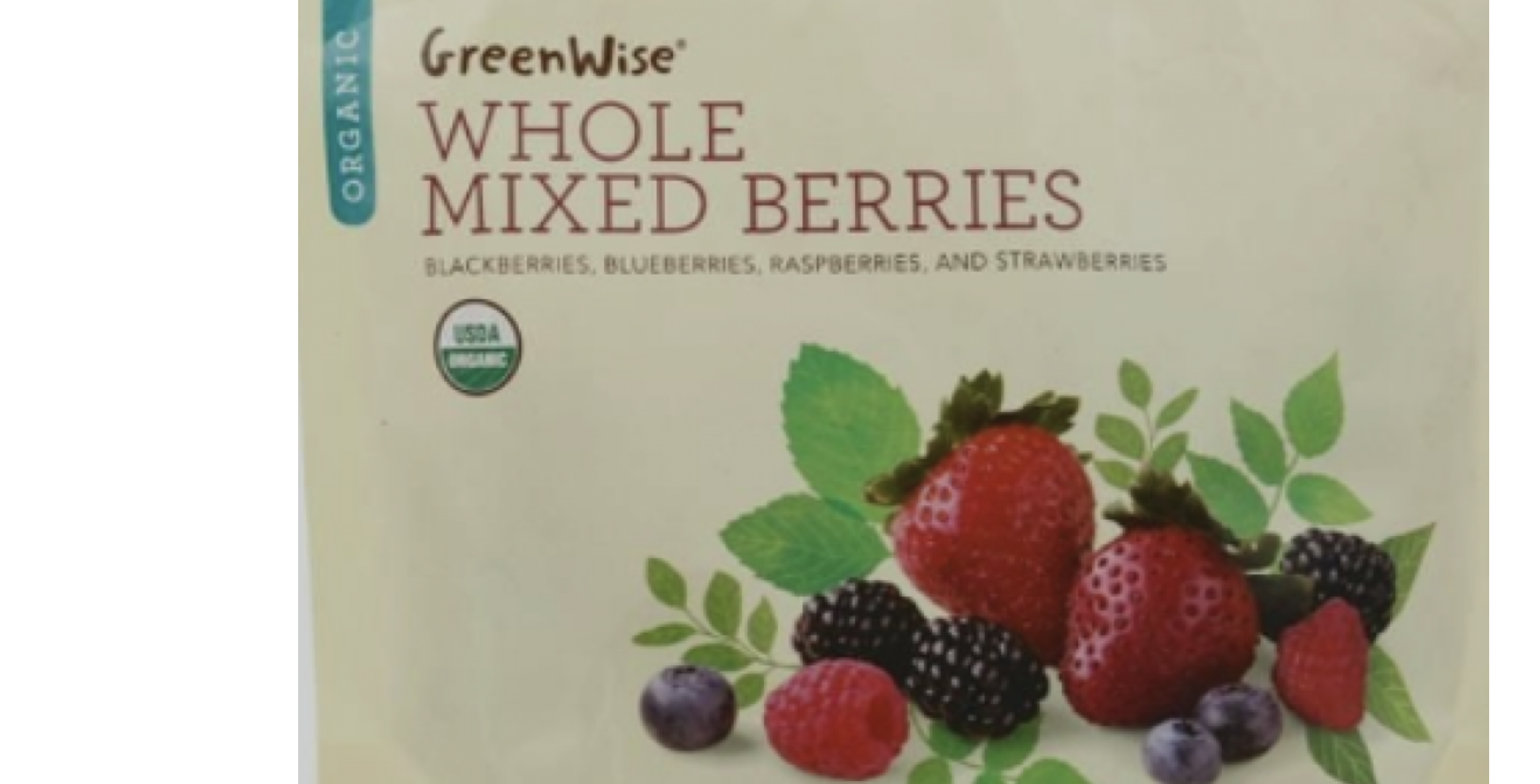
The FDA is investigating an outbreak of infections from E. coli O145:H28 that is related to imported, frozen berries sold at Publix stores.
The implicated berries are sold under the Greenwise brand and were imported from Frutas y Hortalizas del Sur S.A., of San Carlos, Chile, according to the Food and Drug Administration.
The outbreak has sickened 12 people in Florida and Georgia. Four of the patients have required hospitalization.
Publix has recalled the berries, which were distributed to stores in Alabama, Florida, Georgia, Kentucky, North Carolina, South Carolina, Tennessee and Virginia. The berries could have been further.
Customers who have purchased the following frozen GreenWise products are reminded not to consume them, and the products should be discarded or returned to Publix for a full refund. The following products are subject to the recall:
GreenWise Organic Whole Blueberries, 10-ounce, UPC 41415-06453GreenWise Organic Whole Blueberries, 48-ounce, UPC 41415-12053GreenWise Organic Whole Mixed Berries, 10-ounce, UPC 41415-06753GreenWise Organic Whole Mixed Berries, 48-ounce, UPC 41415-12153
As part of its outbreak investigation, FDA conducted a a remote inspection of Frutas y Hortalizas del Sur S.A., San Carlos, Chile, and collected records from the firm to better understand their procedures and hazard controls, or abilities to prevent food from becoming contaminated. Based on inspection findings, FDA had concerns about at least one other lot of blueberries that was used in additional frozen GreenWise products. Publix has recalled such products, as indicated above.
Additionally, the FDA has concerns about other products from Frutas y Hortalizas del Sur S.A. that have not entered the U.S. market. The FDA has communicated its concerns to the firm. The FDA has added products from Frutas y Hortalizas del Sur S.A, of San Carlos, Chile to Import Alert 99-35. Frozen blueberries from this firm that are offered for entry into the United States may be detained without physical examination at U.S. borders.
The FDA and state partners are actively working to determine the source of contamination. Additional products may be added to this advisory as the investigation continues.
About E. coli infections
Anyone who has eaten any of the recalled berries and developed symptoms of E. coli infection should seek medical attention and tell their doctor about their possible exposure to the bacteria. Specific tests are required to diagnose the infections, which can mimic other illnesses.
The symptoms of E. coli infections vary for each person but often include severe stomach cramps and diarrhea, which is often bloody. Some patients may also have a fever. Most patients recover within five to seven days. Others can develop severe or life-threatening symptoms and complications.
About 5 to 10 percent of those diagnosed with E. coli infections develop a potentially life-threatening kidney failure complication, known as a hemolytic uremic syndrome (HUS). Symptoms of HUS include fever, abdominal pain, feeling very tired, decreased frequency of urination, small unexplained bruises or bleeding, and pallor.
Many people with HUS recover within a few weeks, but some suffer permanent injuries or death. This condition can occur among people of any age but is most common in children younger than five years old because of their immature immune systems, older adults because of deteriorating immune systems, and people with compromised immune systems such as cancer patients.
People who experience HUS symptoms should immediately seek emergency medical care. People with HUS will likely be hospitalized because the condition can cause other serious and ongoing problems such as hypertension, chronic kidney disease, brain damage, and neurologic problems.