
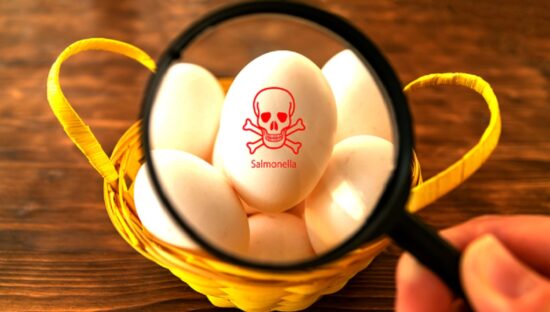
The Dutch poultry sector has implemented measures to try and curb a rise in Salmonella infections.
Figures show an increased incidence of Salmonella Enteritidis in laying hens since May 2023 from less than 2 percent to 4 percent in 2024. The EU target is 2 percent.
Salmonella Enteritidis mainly causes illness through eating contaminated food, especially raw or undercooked eggs. Since May 2023, there have been more laying hens and people contracting this type of Salmonella.
The Minister of Agriculture, Fisheries, Food Security and Nature (LVVN), Femke Wiersma, asked the industry to act ahead of imposing any mandatory rules.
Industry action
During a recent meeting with the AVINED trade organization, the chicken industry promised to take further steps to reduce the presence of Salmonella Enteritidis in laying hens, as well as additional monitoring to reduce the number of human cases.
A key element of the plan, which will affect most laying hen farmers in the Netherlands, is increased testing for Salmonella, allowing early detection of infections. A separate cleaning and disinfection protocol for the transport of eggs from infected laying hen farms also entered into force in October.
Laying flocks aged up to 65 weeks will be sampled every eight weeks and flocks older than 65 will be tested every four weeks, instead of every 15 weeks, as required by European regulations. Visitors to poultry farms must strictly follow hygiene protocols and additional booster vaccinations are planned.
In 2023, 74 positive flocks were detected, followed by 81 in 2024, and 50 in the first half of 2025.
People getting sick
The National Institute for Public Health and the Environment (RIVM) is monitoring the number of human cases. In 2023, Salmonella isolates from 425 patients were typed as Salmonella Enteritidis. In 2024, the number was 400 and, up to June 2025, it was 209 cases. WGS analyses of isolates revealed many small clusters, consistent with different sources of infection.
In April, RIVM sent a letter to the Ministry of Agriculture, Fisheries, Food Security and Nature (LVVN) and the Ministry of Health, Welfare and Sport (VWS). RIVM advised reducing the number of infections in birds by testing for Salmonella more frequently, asking farmers to remove infected chickens quicker and conducting a study on differences between the Netherlands and other European countries.
The Netherlands Food and Consumer Product Safety Authority (NVWA) has also been asked to prepare a risk assessment for the laying hen sector focusing on Salmonella. This is expected to be published in early 2026.
Parliament was informed in September and will be updated in 2026 on the situation, steps the industry is taking, and whether mandatory measures should be imposed.
(To sign up for a free subscription to Food Safety News, click here)