
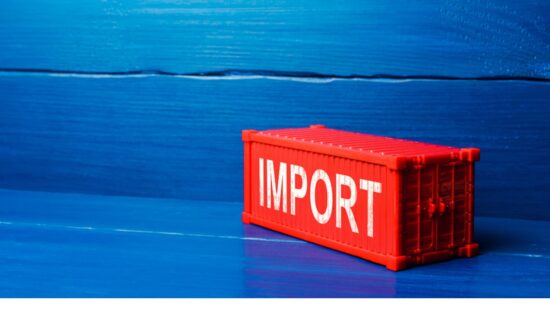
With so much news bombarding them, most consumers don’t realize that U.S. agriculture has reached a “pivotal moment” in its history. No, we’re not talking about production numbers or prices. We’re talking about a record agricultural trade deficit within just the past 10 years.
Simply put, this means that the United States is buying more agricultural goods such as fruit, vegetables, meat and fish from other countries than they’re exporting.
The numbers say it all. According to the USDA, as recently as 2014, the U.S. maintained a nearly $35 billion agricultural trade surplus. However, by 2019, the U.S. was in an agricultural trade deficit. In 2023, this deficit surged to over $21 billion. And in 2024, the United States reached a $37.6 billion agricultural trade deficit — the largest in the nation’s history.
In an article about this unexpected deck of cards, Andrew Rechenberg, Senior Economist at the Coalition for a Prosperous America, puts it this way: U.S. Agricultural Trade Balance Has Completely Flipped Negative.
And now this . . .
As of Aug. 29, the U.S. government put an end to what is known as the de minimus exemption. Now every shipment, no matter how small, or where it comes from, will face full FDA review.
Before this change, shipments valued under $800 could clear U.S. Customs duty and tax free, with minimal paperwork. Overall, this exemption added up to almost 1.4 billion packages entering the United States duty free each day.
The exemption allowed food and food products, as well as a massive amount of dietary supplements and hundreds of shipments of sweets and pastries to come in from overseas every day. However, items such as clothing, footwear, and small electronics make up the bulk of the shipments.
“But now the loophole is closed,” said David Lennarz, president of Registrar Corp.
When it comes to food in general, food that previously came in under the exemption will likely cost more due to the extra expense of importing it into the United States.
According to the Registrar Corp., the end of this exemption, coupled with sweeping tariff changes will create major headaches for the food industry.
“The real question will be whether consumers will get to the checkout and ask themselves if the extra cost of olive oil from a little farm in Italy is worth it,” said Lennarz. “Or whether the consumer will decide to look for a different product.”
What about food safety?
As for being able to ascertain whether the previously exempted food will be safer now that it the exemption has ended, Lennarz, said it will be hard to say since there isn’t yet enough data to compare the two. But he also said there will be FDA teams on the ground and at ports of entry. Even so, he said it’s still a question if the agency will have the wherewithal to do that considering the current funding cuts to the agency.
“Obviously the FDA will be giving the food more scrutiny,” he said. “And companies will have to make sure they’re complying with food safety regulations. We’ll see how it goes when we have some more statistics about this. We’ll definitely see a huge uptick in the volume coming into this country.”
(To sign up for a free subscription to Food Safety News, click here)