
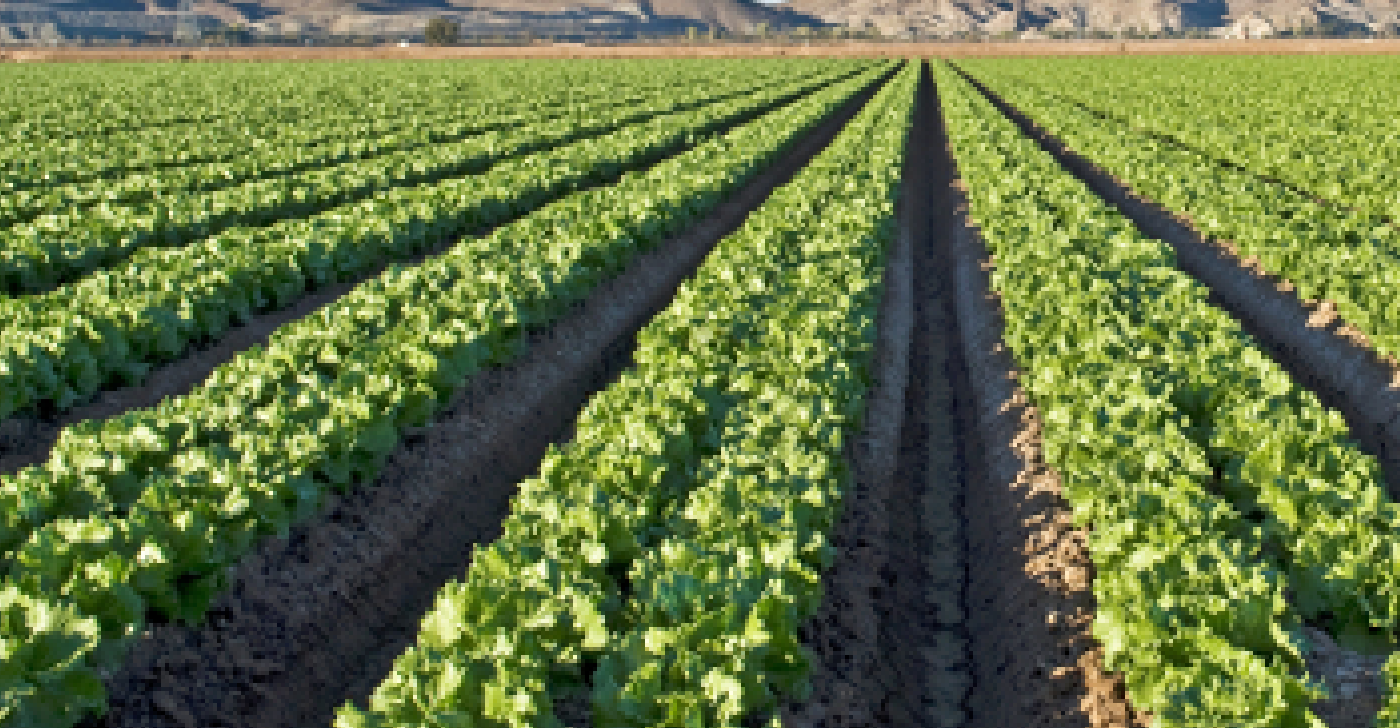
California’s Central Coast produces a massive share of the fresh vegetables eaten across the United States. At the heart of this region lies the Salinas Valley, a 90-mile-long coastal valley south of Monterey widely known as the “Salad Bowl of the World.” The valley alone produces roughly half of the nation’s lettuce – including iceberg, leaf, and romaine – along with vast quantities of broccoli, spinach, strawberries, and hundreds of other crops that feed the country year-round.
But this productivity does not come without challenges. Between 2016 and 2020, several foodborne illness outbreaks linked to leafy greens were traced to the Central Coast region, many caused by the same strain of the bacterium E. coli O157:H7. In response, the U.S. Food and Drug Administration (FDA), in partnership with the Western Center for Food Safety at University of California Davis, the California Department of Food and Agriculture, and local stakeholders, launched the California Longitudinal Study in 2020.
The study was designed to identify the environmental factors that influence the introduction, persistence, and movement of foodborne pathogens in the region, and provide actionable insights to help growers, regulators, and researchers improve produce safety practices. Early results largely reinforce existing knowledge of how pathogens circulate among animals, waterways, soil, and produce-growing environments in California’s Central Coast.
Here’s what the study reveals so far.
A massive environmental sampling effort
Over five years, researchers carried out one of the most comprehensive environmental monitoring efforts ever conducted in a produce-growing region.
Between August 2020 and May 2025:
40 multi-day sampling events were conductedThe study covered roughly 7,000 square milesSampling occurred at 80 public sites, 14 livestock ranches, five produce farms, two composting facilities, and two vineyards
Researchers collected 6,134 unique samples, including:
Surface water (704 samples)Soil (1,425 samples)Sediment (1,057 samples)Air and dust (312 samples)Livestock feces (923 samples)Wildlife feces (942 samples)Biological soil amendments such as manure (237 samples)Insects (32 composite samples)
Each sample was tested for dangerous strains of bacteria including Shiga toxin-producing E. coli (STEC), which includes the well-known pathogen E. coli O157:H7. Researchers also used whole genome sequencing to compare bacterial strains and track how they might move across landscapes, animals, and environmental sources.
Key Finding #1: Animals are a major source of pathogens
One of the clearest conclusions from the study is that animals play a major role in introducing pathogens into the environment.
Researchers detected STEC in fecal samples from a wide range of animals:
CattleFeral pigsDeerCoyotesBirds such as crows, ravens, doves, and hawksOther wildlife including bobcats and elk
The highest prevalence of STEC occurred in wildlife and livestock fecal samples. Highly pathogenic STEC serotypes O157:H7 and O26:H11 were isolated from feral pig, coyote, and bobcat feces. STEC O26:H11 was also isolated from bird, elk, deer, squirrel, and rabbit fecal samples. Overall, 29 different STEC serotypes were recovered from wildlife fecal samples, including some considered highly pathogenic to humans.
Rangeland beef cattle showed particularly high contamination levels compared with animals like sheep or horses. 46 different STEC serotypes were recovered from livestock feces including O157:H7, O26:H11, O103:H2, and O111:H8.
The findings also revealed that some bacterial strains found in wildlife matched strains found in cattle, indicating pathogens can circulate between domestic livestock and wildlife populations.
Key Finding #2: Pathogens can persist in animal feces
The study confirmed that STEC bacteria can remain viable in animal feces for extended periods, increasing the potential for environmental contamination. Researchers detected STEC in both fresh fecal material and older, dried feces.
This indicates that contamination risks can persist long after animals have left an area. Events such as heavy rainfall, flooding, or animal activity could disturb these fecal deposits, potentially spreading bacteria into surrounding soil or water.
Key Finding #3: Waterways help move bacteria through the landscape
Surface water emerged as one of the most important environmental pathways for pathogen movement. Researchers frequently found STEC in rivers, creeks, surface water, and sediment within waterways. In contrast, the bacteria appeared less frequently in irrigation runoff and far less often in soil or air.
Sites near cattle rangelands or riparian habitats tended to have higher levels of contamination in water and sediment samples. In one case, a drainage ditch located downhill from cattle grazing areas repeatedly tested positive for STEC over more than three years. These findings confirm that water systems can act as both reservoirs and transportation routes for pathogens across the region.
Key Finding #4: Soil and air are less significant vectors
Although bacteria were occasionally detected in agricultural soils, they were relatively rare overall.
Only about 1 percent of soil samples contained STECViable bacteria appeared in less than 1% of passive air samples
This suggests that soil and air are not major drivers of pathogen movement in the Central Coast agricultural system. However, soils located closer to waterways or cattle grazing land did show slightly higher contamination rates. Researchers also observed that field flooding events could temporarily increase pathogen detection in nearby soils and irrigation runoff.
Key Finding #5: Many strains exist, but not the outbreak strain
One of the study’s most notable results involves pathogen diversity.
Scientists identified:
68 total STEC serotypesIncluding six highly pathogenic types:Escherichia coli O157:H7O26:H11O103:H2O111:H8O121:H19O145:H28
In total, 12 different strains of E. coli O157:H7 were found in environmental samples. However, researchers did not detect the specific outbreak strain responsible for recurring illnesses between 2018 and 2020. Some strains persisted in the environment for nearly two years, and the same strain was occasionally found 70 miles apart or over 15 months apart, suggesting wildlife movement may contribute to regional spread.
What this means for food safety
For produce growers and regulators, the findings largely confirm what researchers and industry professionals have long understood: foodborne pathogens can occur naturally in agricultural environments, and factors such as livestock, wildlife, surface water, soil, and weather conditions can contribute to their presence in produce-growing regions.
The results further support existing risk management practices aimed at reducing contamination risk, including:
Managing livestock and wildlife activity near produce fieldsMonitoring and assessing agricultural water sources Conducting environmental risk assessments prior to harvest
Kudos to the California livestock and produce industries for assisting in this research.
What comes next
Analysis of the dataset is ongoing, with researchers now examining samples for additional pathogens, including Salmonella and Campylobacter. To date, the study has identified 606 Salmonella isolates and 428 Campylobacter isolates, all of which are undergoing genetic analysis to better understand their distribution and potential risks.
More detailed findings are expected to be presented at upcoming scientific gatherings, including the Western Food Safety Conference in Salinas, CA, in May 2026, and the International Association for Food Protection annual meeting in New Orleans, LA, in July 2026.